Cosmeston

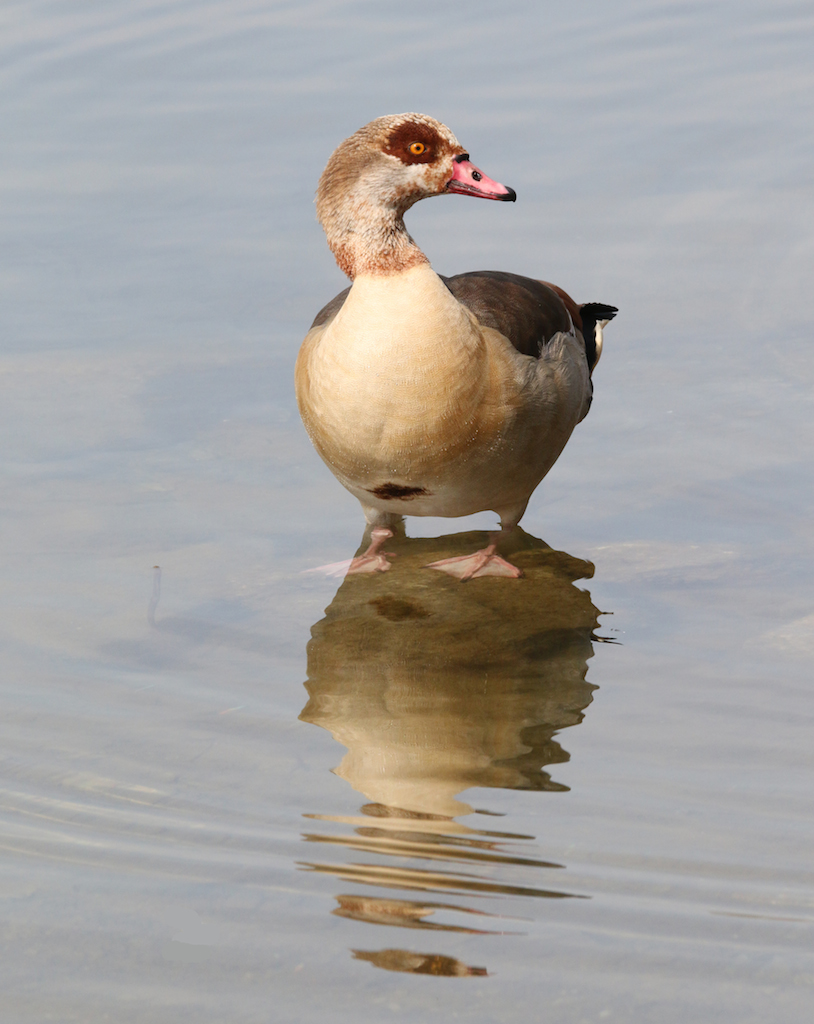
Here’s a couple of shots of the Egyptian Goose on E lake this morning. Another addition to the various duck exotica seen in the park over the years (such as Red-crested Pochard, Black Swan, Chiloe Wigeon, Ringed Teal, Bar-headed Goose, Mandarin, and Ruddy Duck).

Egypt 1 webEgypt 2 web

Cosmeston

The hybrid Aythya duck still present on E lake, Cetti’s Warbler singing at far end of the boardwalk, Mistle Thrush singing E paddock, 3 prsof GC Grebes, Green ‘Pecker calling. Also the leucistic Herring Gull still on E lake and getting v v pale – almost all white now except for primaries.

Cardiff Bay

Two Bonaparte’s Gulls were seen at Cardiff Bay this morning, and the Little Gull, I believe at the road bridge end of the Bay. I and several others watched one of the Bonaparte’s at the Barrage end late morning,and the footless 2nd yr Med Gull was there too.

Barrage/Bay

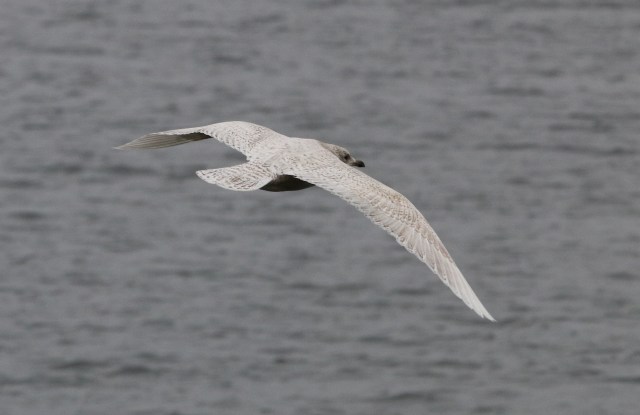
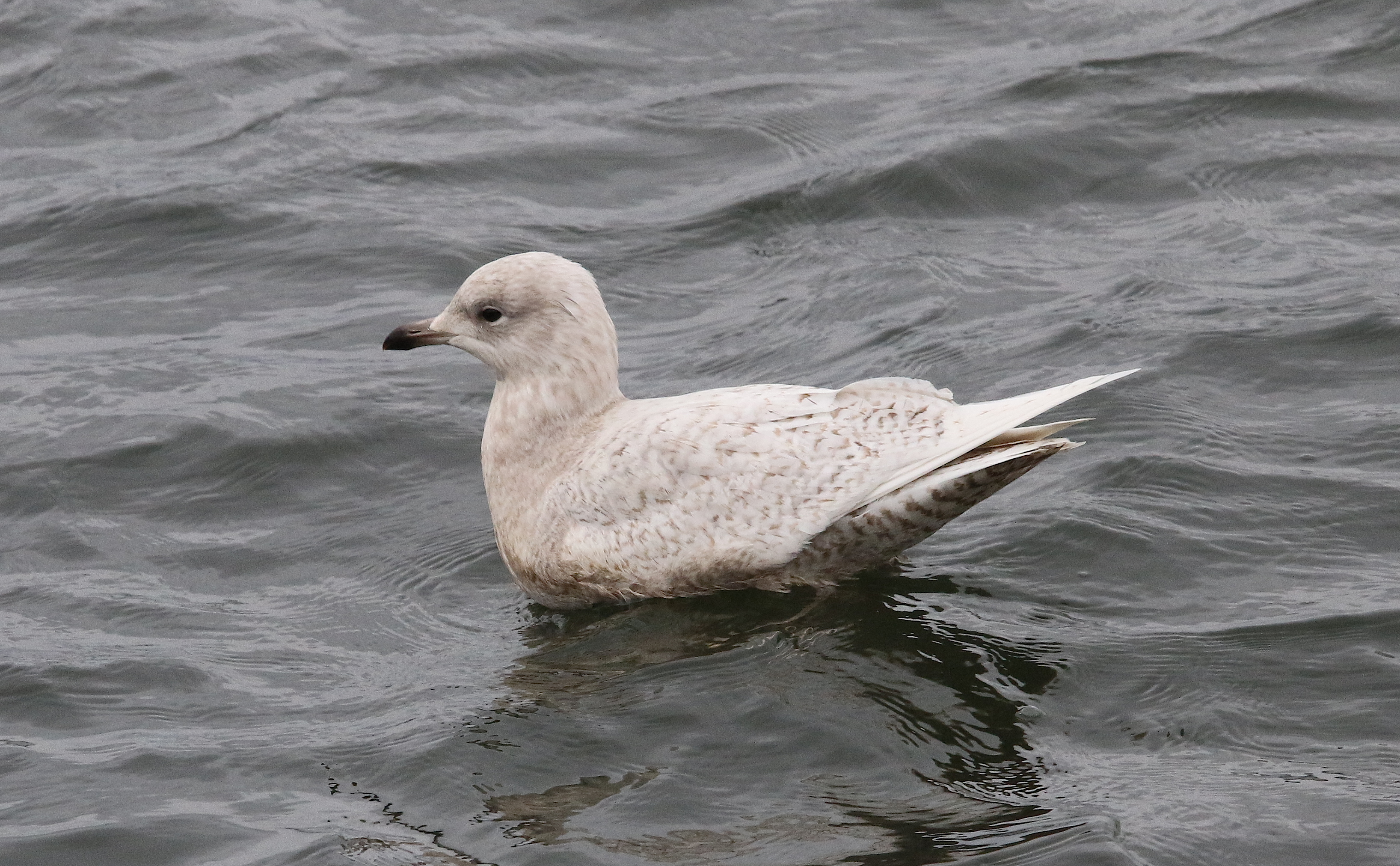
Went back with my camera this morning to get some trophy shots of ‘my’ bird, lol. Finally caught up with it when it flew up the R. Ely and landed amongst the yachts moored by the white water centre. It then came back allowing a few flight shots and landed off Plas St Andresse.

IMG_4631  IMG_4595

Cardiff Bay/ Penarth Marina

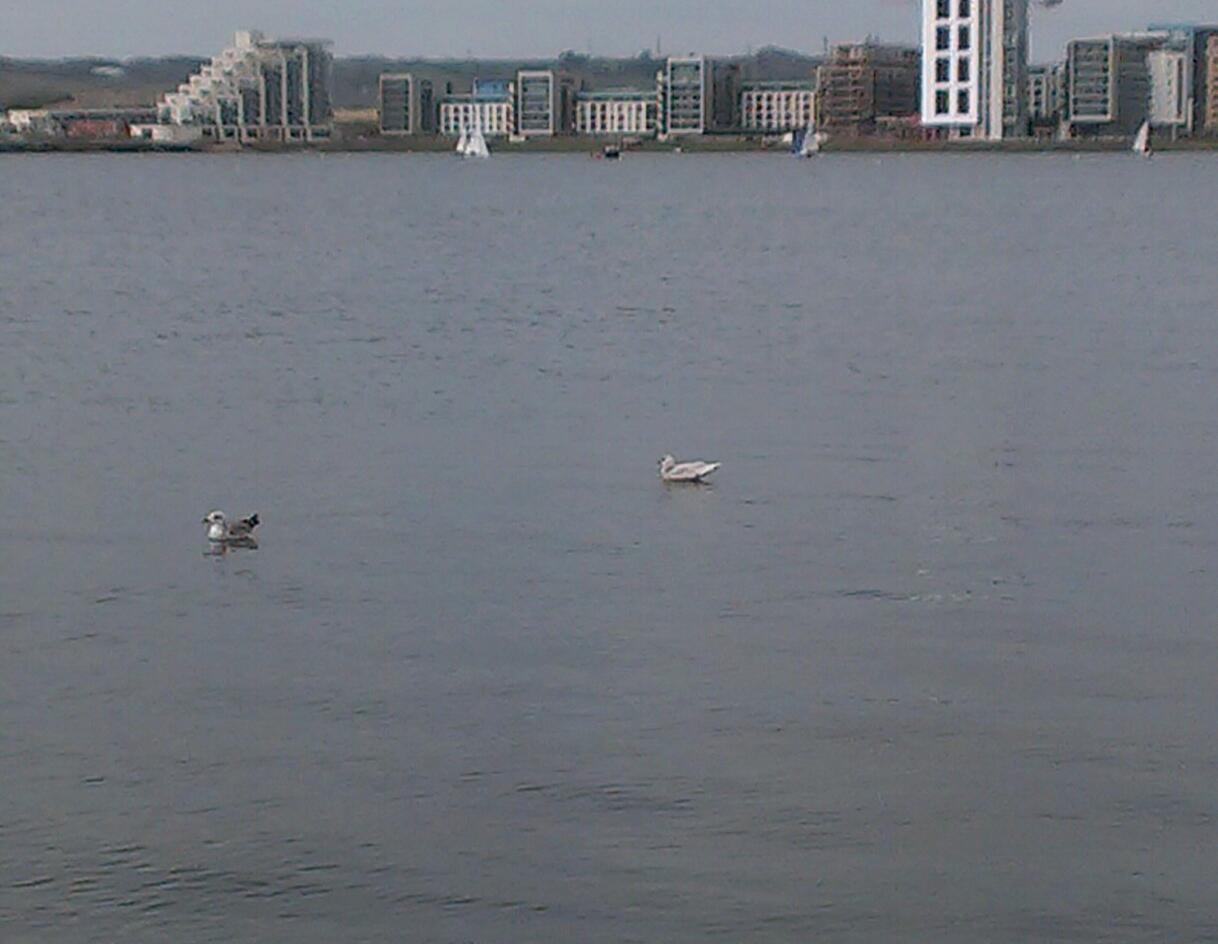
A 1stW going into 2nd yr plumage Iceland Gull was a nice surprise at the barrage this morning. First seen sitting on the inner jetty then on the water just inside the barrage. Sods law I hadn’t taken my camera but here’s a phone shot FWIW. There shd be some decent pix forthcoming, from Lol Middleton and A N Other. After a while it flew off and landed somewhere in the Wetland Reserve. Also after I left I had a call to say that the Bonaparte’s was there, sitting on the buoys where the Common Gulls often hang out. A fem Black Redstart was at Penarth Marina in the small square that overlooks the outer harbour of the marina.

IMAG0730_1

Reminder – Field trip to Forest of Dean

Field trip on Weds to Forest of Dean for Gos, Hawfinch, Mandarin, MarshTit etc. Aiming to get to New Fancy View at 9 a.m. altho’ that may be a bit optimistic given morning traffic. I am aiming to leave St Margaret’s Rd, Whitchurch at 07:45 depending on how long it takes me to get there from Penarth! New Fancy View is N of Parkend here http://tinyurl.com/lt2jlrv [see the orange arrow]. Whatever, we will all eventually be there at NFView and hope the Gosses perform.

Cosmeston a.m.

Drake Lesser Scaup still on W lake with about 6 Tufties. Flock of 50 winter thrushes in W paddock, c25/25 Redwing/Fieldfare. Six Chiffies fly-catching from the trees adj W lake by the central path. 1 Jay by the central path. No Sand Martins. 2 Mistle Thrush singing in woods behind the play park.

Cosmeston

The drake Lesser Scaup was on W lake Cosmeston this morning with a small group of Tufties. Pretty confident it was the bird and not the hybrid Lol & I saw a couple of weeks ago. This had a tiny black bill ‘nail’ and very flat nape, and a plummy tone to the head rather than the coppery tone and extensive black nail of the hybrid. Also 4 prs of GC Grebes 2 pairs on each lake. A Mistle Thrush was singing by the central path near W paddock.

Cosmeston

Short walk late a.m. Drake Wigeon on W lake tog with 4 Gadwall, 6 Pochard, 30 Tufted Duck, 3 Cormorant. Pr GCG displaying on E lake. 30 each of Redwing and Fieldfare flew out of trees on N side to E lake, and 2 Green Peckers by the playground.

Gwent

Highlights of today’s GBC trip to Goldcliff and Newport Wetlands.

Goldcliff – 40+ Avocet, 5 Grey Plover, 2 Spotshank, 3 Ruff, 1 Knot, 20+ Blackwit, 2 Greenshank, plus Dunlin, Redshank [incuding a pair mating], and Lapwing, and all dabbling ducks except Pintail.

Wetlands – fab views of fem Marsh Harrier over the reeds up by the Alder copse, from the hide there. Also another Harrier sp east of there poss a ringtail but too distant and v brief view.

R. Taff by Hamadryad

The Little Gull was on the Taff about halfway between the rowing club launch site and the main Cardiff Bay bridge, viewed from the W side of the river, at 3:30 this arvo. Also a pair of Goosander there, and a Cetti’s Warbler sang briefly in the shrubbery by the river [first time I’ve heard one on the opp side to Hamadryad]. A Chiffchaff was in the same bushes as the Cetti’s. Have just added these two shots of the ‘redhead’.

IMG_4418 IMG_4427

Cosmeston

Interesting Aythya hybrid on W lake Cosmeston this morning. Looked superficially like Lesser Scaup, but had bronzy tinge to head and was slightly bulkier than Tufted. When Lawrence arrived with his scope, the balck bill nail could be seen the too extensive. Nape was flat-ish but not flat enough IMO although it did have the small bump at the join of nape & crown. Back was nicely vermiculated grey. You have to wonder whether the regular Lesser Scaup is cross-breeding.

Also present of interest, 1 drake Wigeon and 3 Gadwall

Out of county – Dorset

Still down at mum-in-laws. Did some birding today: Sandsfoot Castle (Portland Hbr) – 4 Slav Grebe, 1 Black-necked Grebe, 1 GN Diver, 1 fem Eider, c50 R-b Merganser, Shag; Portland Castle (Portland Hbr) – Black Guillemot and another 50+ R-b Merg. Portland Bill – 3 Purple Sand, 6+ Rock Pipit, 2 ad Gannets > E. Ferry Bridge – 50-100 Brent. v v cold & windy so didn’t stay to try & sort out Pale-bellieds.

Cosmeston

The only things of interest in a shortish walk this morning were two very smart Greylags on E lake. Also there was the unusual sight of the drake Pintail wandering around on the footpath near the bird table by E lake. W lake had the usual Tufties and Pochard and some Teal hiding in the reed edges, and there were 2 Little Grebe and a total of 5 GC Grebe.

East Glam Bird Atlas – at last.

Not a sighting but significant news.The web-based East Glamorgan Bird Atlas is now live! Wayne Morris, one of the project sub-committee has just passed on the following message:

Data from all BTO national atlases and our bird club has been used to illustrate species distribution maps for both winter and breeding seasons from the 1960s to the present decade.  Categories of breeding evidence are shown using a range of symbols, and breeding change maps are offered for 1984 vs 2011.  Species richness maps for more than 300 tetrads show the hotspots across the region.  Urban areas, rivers and birding sites can be viewed by a simple mouse-click.
Credit goes to the Club committee for having the ambition to produce another local atlas. A book was perceived in the early days as being the vehicle to publish the data.  Over time, it became clear that a web-based version would best match our needs, providing easy-to-use facilities to switch maps for each species through the decades.  Viewers can now see historical losses and gains of our avifauna in a readily accessible, attractive format – for free.  I think it succeeds.
It has of course, been a huge effort.  Hundreds of volunteers have spent many, many hours in the field capturing the data over nearly 50 years. In turn, this has been collected, reviewed and stored by the Club and latterly in partnership with our friends at SEWBReC.  Thanks to everyone who’s contributed down the years.
Finally, thanks go to Alan, Dan, Dave and Rob for working on the project over the years, from planning fieldwork for the latest survey, overseeing data collection through to final publication with the services of Chris Dee at Garganey Consulting who has done a terrific job in fulfilling our requirements.
I hope you enjoy using our new atlas
There’s too many features to explain in detail so play around with it.