
Heard and saw my first Redwing going over when I opened the front door first thing and yesterday there was a Swallow at Loughor Foreshore.
Author: BARRY STEWART
How many species?
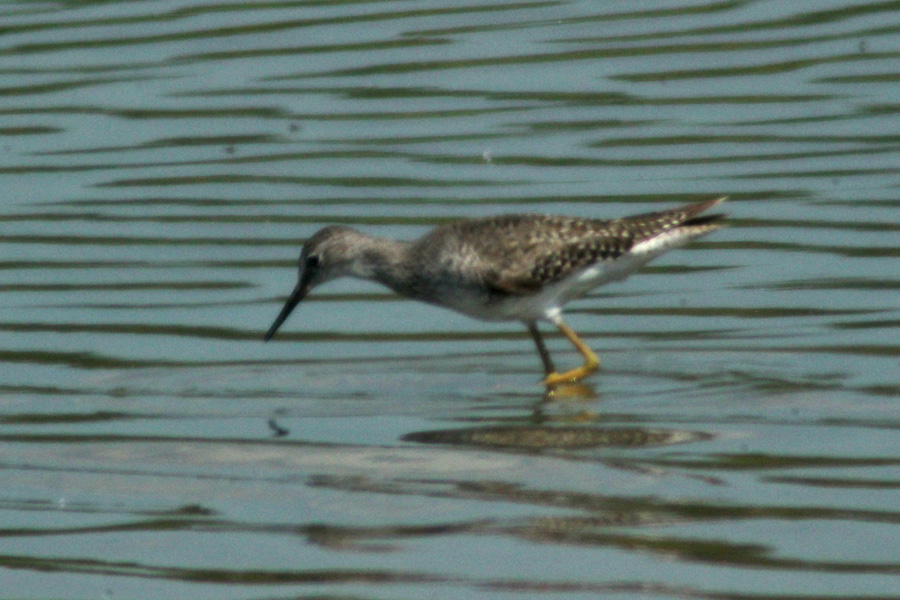
Not counted myself yet, but how many species can you see/hear in this phone-scope video made at Penclacwydd this evening? No prizes, just for fun! You can have Lesser Yellowlegs for starters.
Burry
There was a perfect female American Wigeon in with a flock of 500+ Wigeon by Culvor Road today, but unfortunately the flock was spooked and landed elsewhere and I failed to confirm the underwing, so one to look out for if you’re passing that way (park on Culvor Road SS572977 and walk under the railway bridge, but not in the entrance gateway to the barns, which are frequently used). Video clip of flock taken before I noticed this bird – maybe you can spot it?
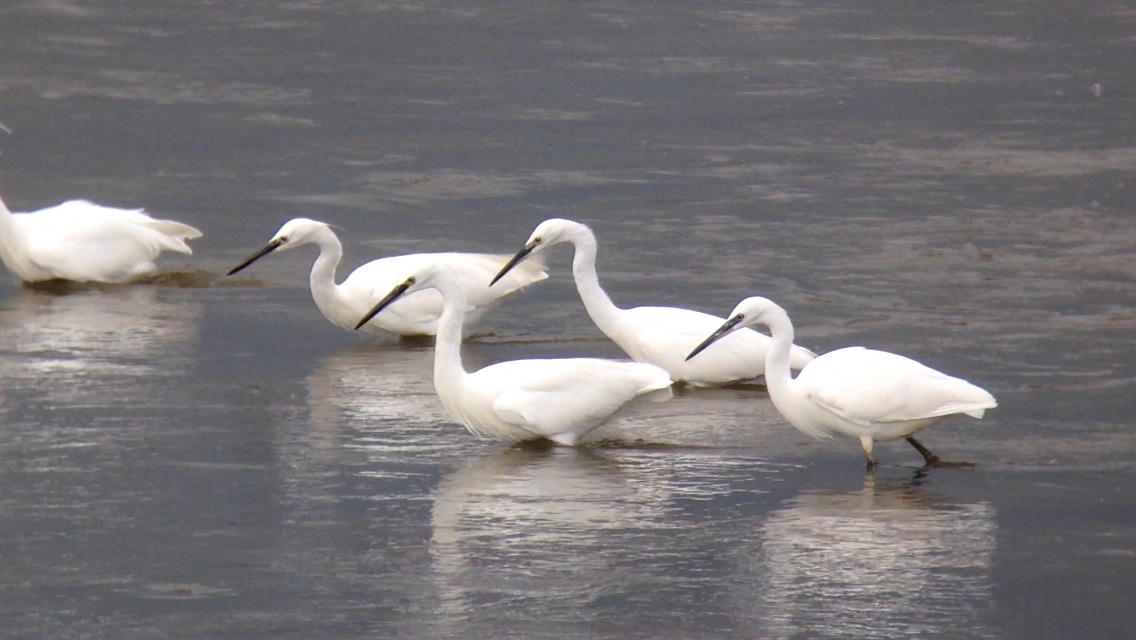
Otherwise 23 Little Egrets and a 1cy Yellow-legged Gull at Loughor Bridge.
Burry Inlet
The first Dark-bellied Brents of the autumn have arrived, 82 in total; comprising 23 at off Salthouse Point, 45 off Wernffrwd and 14 off Machynys (Carms).
Loughor Bridge
An Arctic Tern and 87 Wigeon the most interesting additions to the birds frequenting the area around bridge this evening. 30+ Little Egrets just north of the bridge probably equates to c.15% of the birds in the Burry at Present, although observations at WWT indicate there could be a lot more.
Penclawdd
The juvenile Marsh Harrier is still present, watched hunting the marsh straight out from the car park this morning – later seen on the Carms side of the estuary at Penclacwydd (Wendell Thomas et al). I presume this is the same bird first seen by Mike Piercey on 23 Aug and subsequently by Owen Leyshon, Owain Gabb, Wendell Thomas, etc.
Weobley waders

For anyone interested in going out to the Weobley Triangle this autumn it’s worth noting the main small wader flocks were active in the areas shown blue, even after the tide had dropped well below these areas. I suspect birds are active in these areas at all states of tide (other than above mean high). Today the flocks were made up mostly of Dunlin c1,000 & Ringed Plover 300 with Little Stint 1, Curlew Sand 1 (3 seen earlier by Chris) and a few few other odds and sods. At high tide the triangle is the preferred spot for birds, but beware if you don’t know the area, it’s easy to be cut off by the creeks, so best to stay on the causeway on an incoming tide. The yellow line shows the route taken by Neil, Sand & myself, a nice round 6km, wellies essential!
Weobley
There were 10 Curlew Sandpipers in the sizeable small wader flock beyond the causeway tower this evening. 764 Dunlin were counted along with c.300 Ringed Plovers, 5 Sanderling, 38 Knot and 1 Golden Plover. Dim peepiau!
Weobley
5 Yellow wags following a group of horses on the marsh were perhaps the highlight of a pleasant walk out on the causeway. Small waders were rather scarce with just 40 Dunlin and 48 Ringed Plover seen, other odds and sods included 3 Wheatears, 403 Curlew, 11 Whimbrel, 3 Greenshank, 1 Common Sandpiper, 2 Wigeon and a Peregrine. 8+ Gannets were feeding mid-estuary.
40 Teal and juvenile Marsh Harrier seen by Mike Piercey at Llanrhidian.
Evening HT on the Burry
A quick look over the marsh from Culfor Road just before sunset produced counts of 212 Redshank (still no Yellowlegs even though it regularly disappears from WWT), 224 Curlew, 19 Whimbrel, 14 Black-tailed Godwit, 5 Common Sandpipers and 100+ Greylags, which have ‘hefted’ to this part of the marsh in recent weeks. The best observation however was seeing hovercraft man, who’s one-man-hovercraft had conked out off Culver Road,dragging his machine across the flooded marsh. Let’s hope it deters him from getting any more adventurous as the disturbance he causes on his high tide tours is unbelievable!
Margam Moors & Port Talbot harbour
There were a couple of Yellow Wags just east of the pine plantation and 3+ Tree Pipits in the plantation itself this morning.
The last couple of days birds on the beach in Port Talbot harbour have included 57 Lapwing, 18 Turnstone, 24 Sanderling, 94 Ringed Plover, 1 Little Ringed Plover, 21 Dunlin, 4 Common Sandpipers & 5 Med Gulls. Additionally the beach south of the long arm has held 25 Sanderling, 8 Dunlin, 141 Ringed Plover, 1 Barwit & 13 Curlew.
Yellow-legged Gull influx
There were 2 juv Y-l Gulls on the scrape at WWT this morning (plus later the Spoonbill & Lesser Yellowlegs appeared). Called in at Loughor Bridge on the way back and there was an adult and another juv YLG there too. RHAT informs me there was a 3rd summer bird at WWT yesterday, so at least 5 in the Burry in the last 2 days. The waders at WWT have been spending a lot of time feeding on the Glamorgan side the last few days. Rob had 675 Blackwits and the Ruff on the mudflats off Dalton’s Point this morning. I saw the godwit flock last night also plus 5 Knot and a s/p Grey Plover. Let’s hope the Yellowlegs with follow suite eventually.
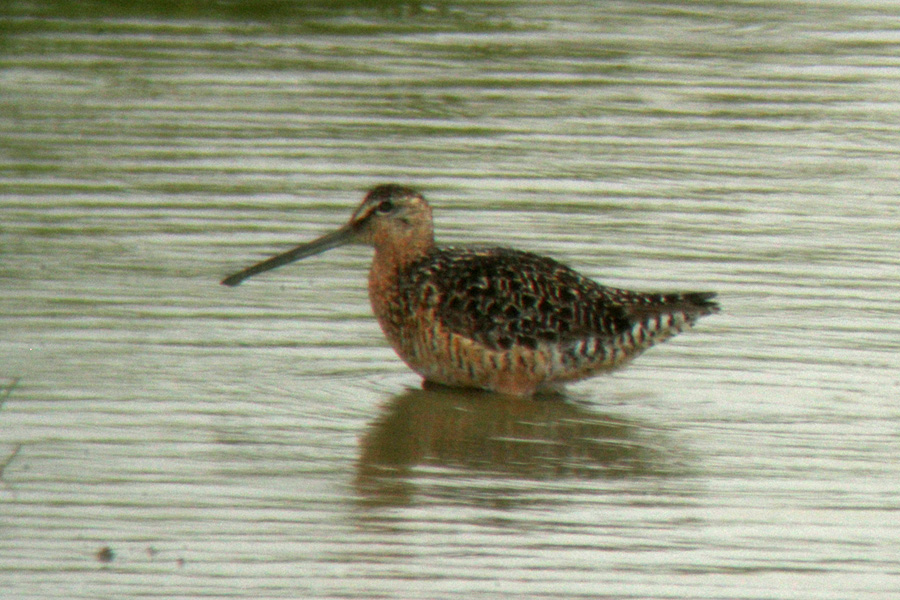
Long-billed Dowitcher at WWT
Ropey digiscope shot, but shows features well enough. More HERE
Kittiwakes on Mumbles Pier
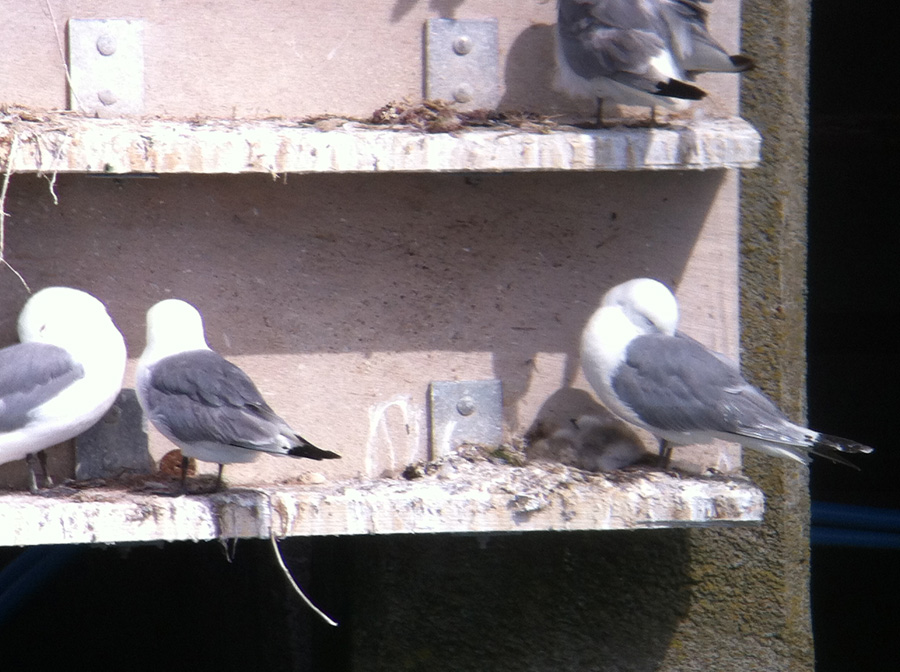
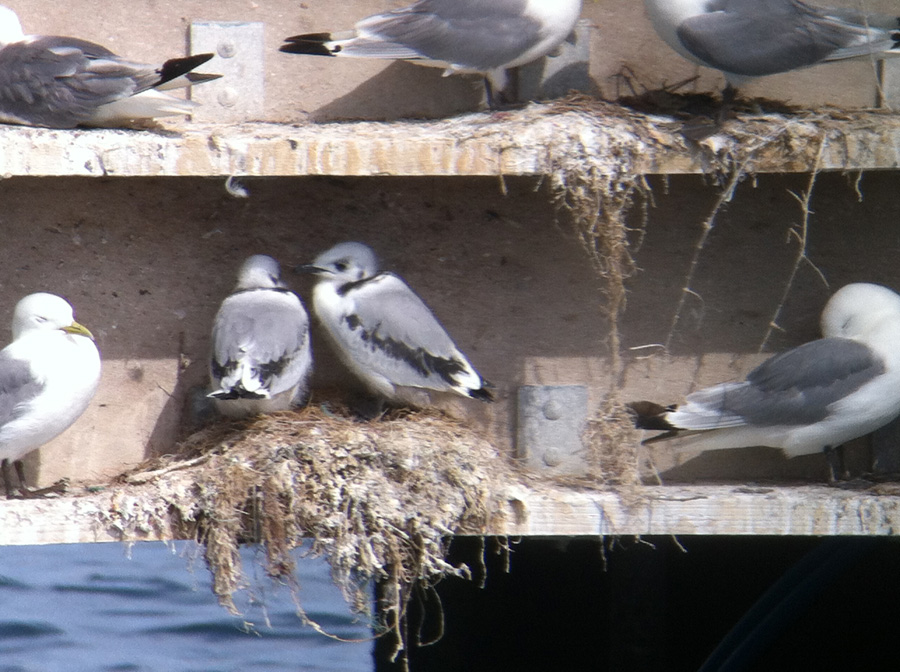
A full count from the pier this morning revealed 325 adults, with 76 apparently occupied nests, mostly on the artificial ledges. 34 nests were with young (another 5 were obscured) with the total count of young being 48. These figures show the site is well on the way to being recolonised to its former level, so congratulations are well in order to all concerned.
The photos show the differences in nest size and chick size, clearly some birds got a much earlier start than others.
Burry Inlet
Counts on the marsh between Gowerton and Crofty on this morning’s tide included: 14 Little Egret, 35 juv Shelduck, 37 Mallard, 3 Med Gull, 112 Common Gull, 1171 Black-headed Gull, 690 Oystercatcher, 257 Curlew, 11 Whimbrel, 1 Snipe, 5 Bar-tailed Godwit, 134 Redshank, 1 Greenshank, 4 Green Sandpiper & 13 Common Sandpiper.
elusive Yellowlegs
I had a tip off that the yellowlegs was absent from WWT yesterday so I paid a couple of visits to Penclawdd Pill (lunch time and evening) as Tringas often interchange between these two sites, which lie on opposite sides of the estuary. There were 44 Redshank at lunch time (including 4 juvs – prob not from the Burry) and over 100 in the evening, though I only saw ~50% of these well enough. Just thought worth mentioning that if you’re passing there it could be worthwhile stopping to check the flock out (go to the west end of Penclawdd car park, the birds normally gather on the bend of the pill there), it’s been a long time since a yellowlegs visited Glamorgan…
PS. It’s back at WWT today (info. Rob Hunt).
A few digiscoped record shots from the day of its discovery on the 7th:


 Glamorgan Bird Club
You must be logged in to post a comment.