A trip to Carmarthenshire

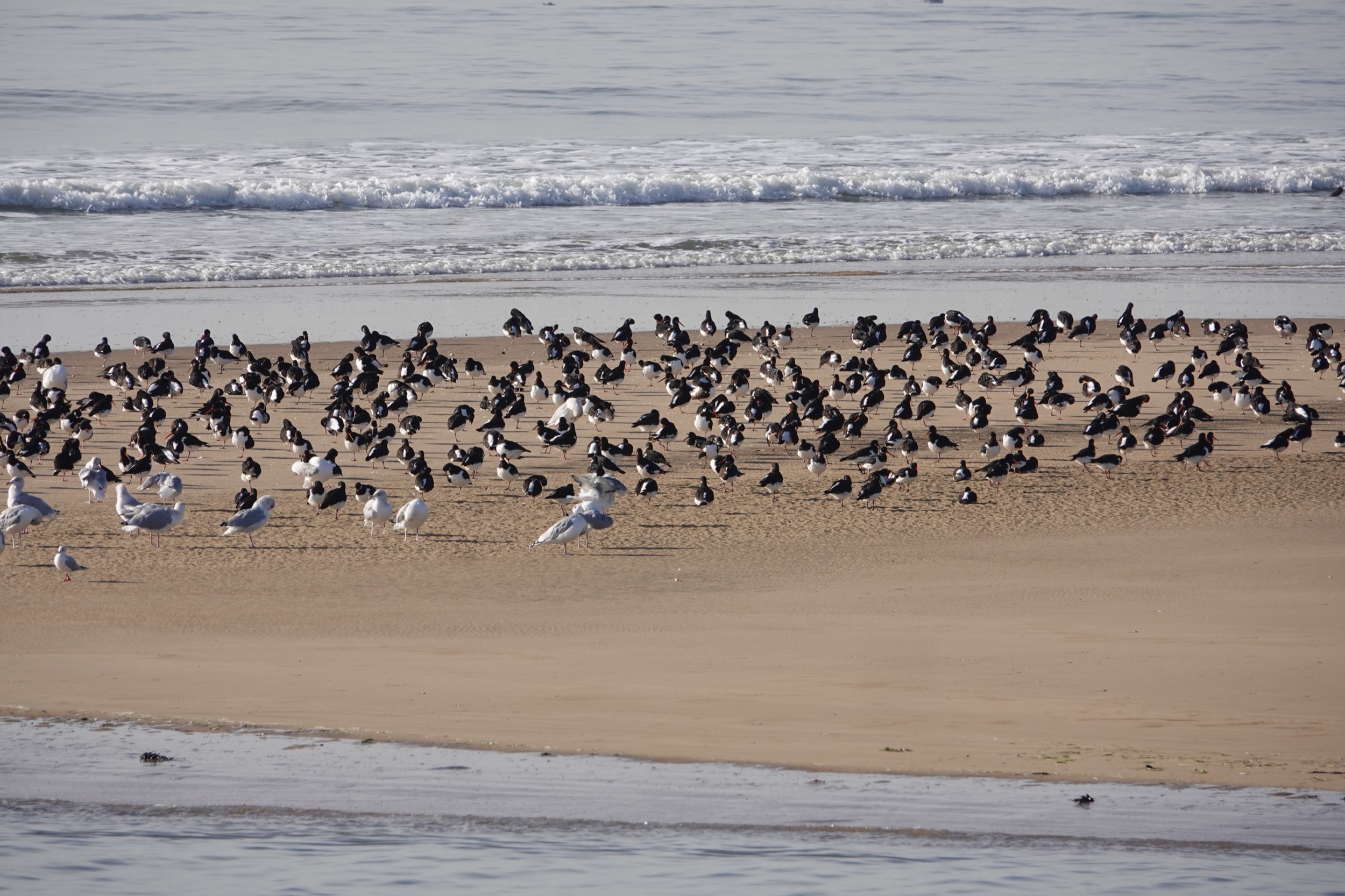
On Sunday 28th Sep 2025 we had a field trip to various sites in Carms – Pembrey Old Dock by Burry Port, Kidwelly Quay, WWT LLanelli and the Loughor Foreshore Open Space [upstream from Loughor Bridge]. 21 GBC members met up at Pembrey Old Dock at 9 a.m. to catch the rising tide. We were disappointed in that the only terns present were around 6 Sandwich in amongst the 1000 or so Oystercatchers. Gulls comprised Herring [v numerous] a few Great Black-backs, a couple of Lesser Black-backs, a number of Common Gulls and Black-headed Gulls. There were 3 Great White Egrets and a fe w Little Egrets in the inlet, and 11 Ringed Plover on the shingly area. A Kingfisher flew and perched along the muddy inland bank of the inlet. Land birds were represented by a huge flock of Linnets, Goldfinches, Rock and Meadow Pipits, Skylarks and single Wheatear and Stonechat. Sharp-eyed Dave Johnston spotted a distant flock of 6 Common Scoter flying out at sea in the Gower direction and a few folk got on to them.

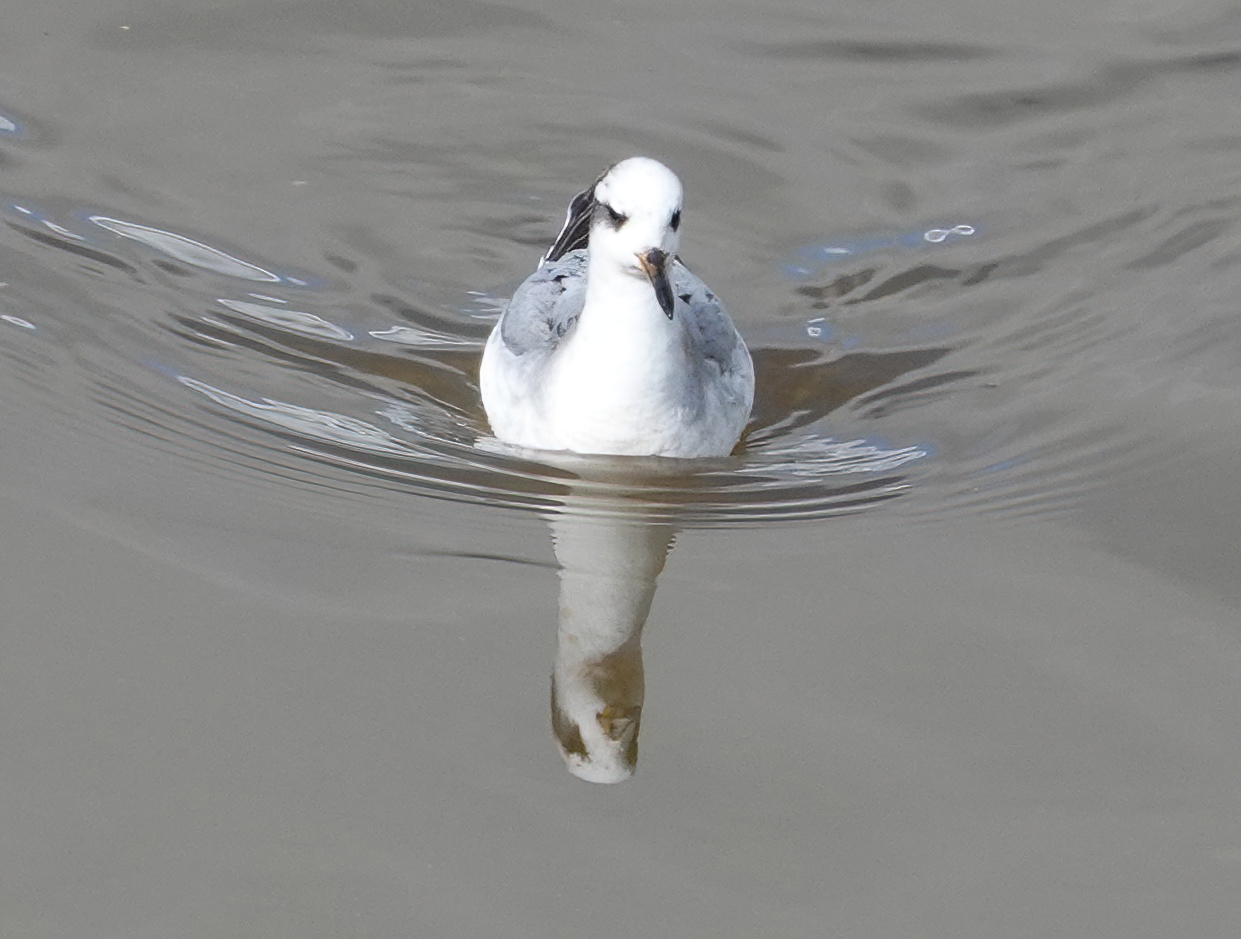
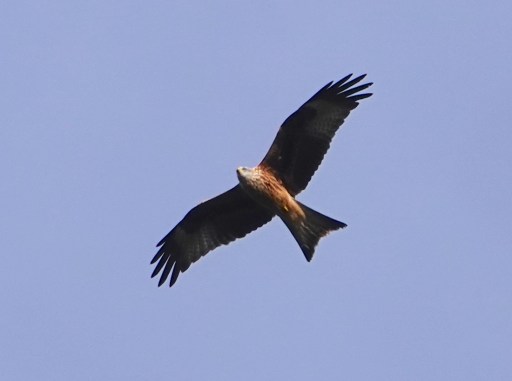
We then headed to Kidwelly Quay where the tide was still falling so not too far out. The initial highlight was a delightful Grey Phalarope swimming around right next to the quay and frequently coming out of the water to walk on the mud like a real wader! [something I’ve never seen a ‘phal’ do]. I managed to lock on to a distant Spotted Redshank which everyone eventually got on to. Other waders here were a couple of slightly elusive Curlew Sandpipers, Redshank, Greenshank, Dunlin, Common Sandpiper, 4 Bar-tailed Godwits and some Curlew, Alan Rosney heard Whimbrel but we couldn’t find any. A good find by Paul Scarborough was a female Red-breasted Merganser which we eventually managed to get folk on to, despite its very frequent diving, and there were also a couple of Little Grebes and huge numbers of Teal. Wigeon and Gadwall were also noted, . A distant Red Kite over Kidwelly village was sighted by Colin Stevenson. I think some folk who didn’t leave immediately, did get on to some Greenshank.

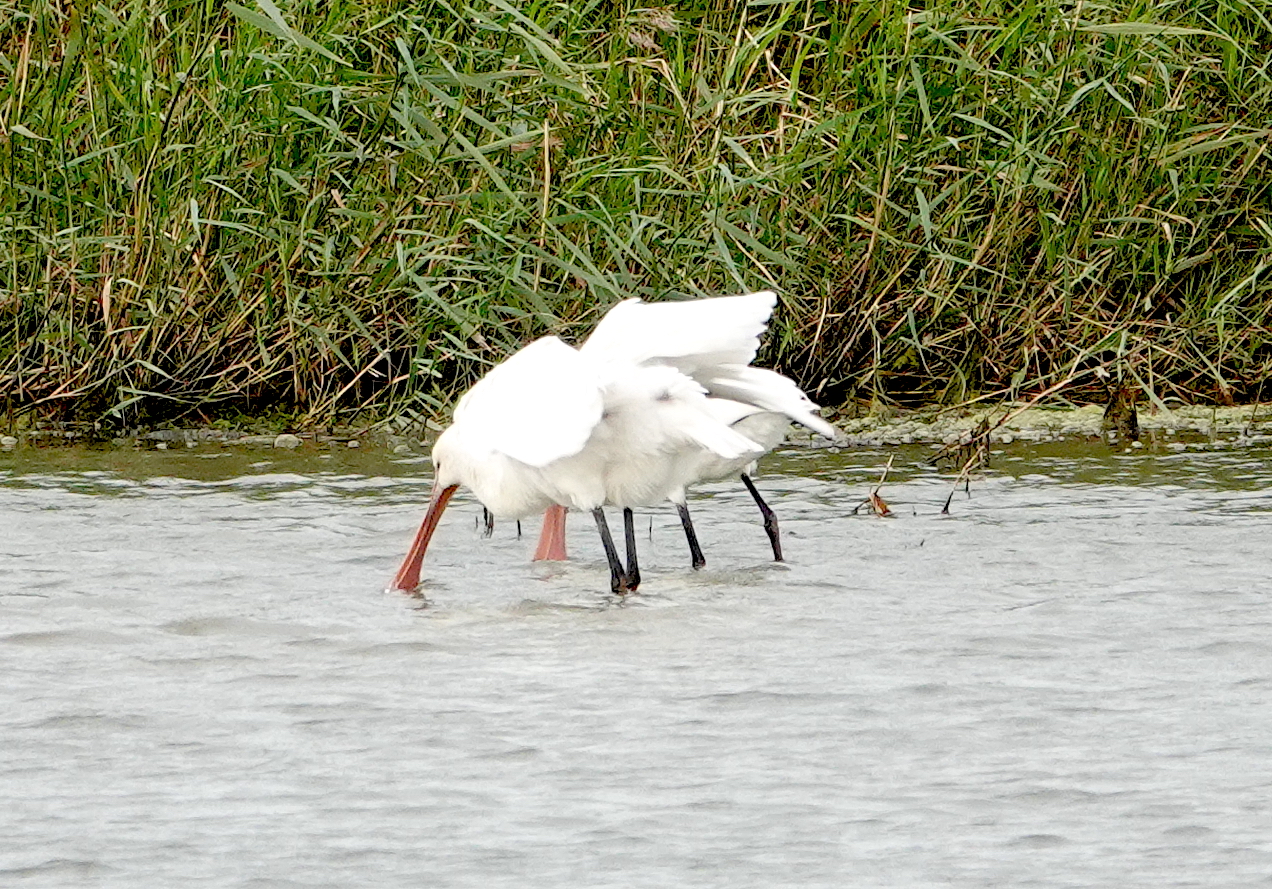
Time to move on again. Some folk did depart at this stage and the rest of us drove east to WWT Llanelli, which in addition to the welcome cup of tea and a cake, produced some excellent views of 7 Curlew Sandpipers, a Spotted Redshank, 7 Greenshank, 2 Ruff, Black-tailed Godwit and a few Snipe. Alan spotted 2 Spoonbills. Shoveler was added to the wildfowl list, plus Canada Geese and a couple of Greylags. Cindy Howells and Julia Banks and poss a couple of others who had lingered in the British Steel hide, also saw a Peregrine.

Finally as the bird news was still reporting a Lesser Yellowlegs by the R. Loughor, which was in the homeward direction, we decided to try & ‘twitch’ that – I think it would have been a ‘lifer’ for some. We found the right spot, at the so-called Loughor Foreshore Open Space where there is a waterside car park – a very pleasant spot. Sadly the bird had apparently not long disappeared up a side channel. We did add Pied Wagtail for the trip list tho’! We waited for it to reappear for 30-40 minutes or so but to no avail so we decided to call it a day. It was a great day out and we had logged 64 species. Click here for the full list.
Bryngarw CP 7 Aug 2025

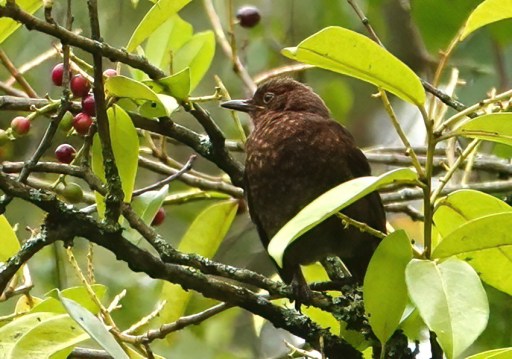
Twelve hardy participants met up at Bryngarw Country Park for this weekday field trip. It wasn’t looking too promising as I encountered heavy drizzle on the way. Our wanderings started off OK but we were drizzled upon as we did a full circuit of the park, taking in the woodland, open areas, boardwalk and riverside path. One target bird, for yours truly at least, was Spotted Flycatcher, a species harder to encounter these days. The most noticeable thing during the walk was how quiet it was. Birds were few and far between. A few active Nuthatches were the first seen, in trees near the car park, and a Great Spotted Woodpecker flew over, giving a brief ‘chick!’ call. There were plenty of Robins which were characteristically vocal, but other avian vocalisations were few. Two juv Blackbirds were feasting on berries in the woodland section. As we descended towards the boardwalk area, some movement was spotted in a couple of very tall Ash trees, and the behaviour suggested Spotted Flycatcher, due to the looping sorties. They never showed very well but in a brief perched view a few folk saw the upright stance and very fine bill. The trees were very tall so the views weren’t the best. In the open field beyond the boardwalk we stood in the by now heavy drizzle and eventually found a smart male Stonechat and a Wren. Down by the river Garw we had nice views of a Grey Wagtail, but we ‘dipped’ on Dipper. Tim Adcock & I had a brief view of a fly-catching sortie by another ‘Spot Fly’ which then promptly disappeared. Chaffinches were ground feeding by the small lake and 2 Moorhens were amongst the many eclipse plumage Mallards, and a Lesser Black-backed Gull was very vocal. It wasn’t a raptor day, but 2 Ravens flew over, cronking. More drizzle arrived so we called it a day and some went home and a few of us retired to the café for a coffee and snack. John Wilson

The day’s total was a paltry 23 species – click here for the list

Nash Point & environs 27 Jul 2025

11 GBC members attended the re-jigged Nash Point [rather than Rhossili] field trip this morning. We walked 7.5 km in a circular walk E along the cliffs round the back of Atlantic College then back across the inland fields. Our luck was in and more or less the first birds we saw were 2 Chough feeding on the grass by the lighthouse. They were some way ahead and they disappeared but whilst we were looking around near where they’d been, they were spotted sitting on the roof of one of the lighthouse buildings just above us, allowing great views – and photos. We logged [edit] 42 species. Other highlights were Red Kite, two famiy groups of Stonechat and some smart juv Whitethroats. A big thanks to all who attended. The Chough were new birds for a recently joined member who only moved to S Wales in May, so that was a big positive. Click here for the list [small pdf file].

Rumney Great Wharf – 2 Feb 2025

On a chilly grey day, a large troupe of us [24] set off from Parc Tredelerch car park and after as short walk along the Wentloog Road, we walked up beside Cors Crychydd Reen. The latter had Moorhen, Coot and Mute Swan, and ‘heard only’ Water Rail and Little Grebe. The first bird seen in fact was a Goldcrest in bushes by the road, plus a few Long-tailed Tits. There were Pheasants on the now unworked landfill site, and we logged Song Thrush [singing] and a fly-over Raven, and a Kestrel on a pylon, plus a few other common species. Reaching the seawall we headed west to view the area by Rhymney river mouth. The tide was very high and birds very distant but we did pick out just about identifiable Pintail and a tight roosting flock of Redshank on Green Point, and there were many Shelduck and a few Shoveler. Retracing our steps we then headed east along the seawall, walking as far as roughly the border between Cardiff and Newport. Closer views of Pintail were had for the beginners, and as the tide started to fall, waders started to appear, plus hundreds of Black-headed Gulls. A few flocks of Black-tailed Godwits flying westwards were quite impressive, totalling around 200 birds. A few small flocks of Dunlin and Oystercatcher also flew by. Ceri Jones picked out a Common Gull in an inland field [the only one we saw], and still on the gull front, two full adult Great Black-backed Gulls sitting on a groyne, were impressive when seen through the scopes. By now, tidal mud was appearing, and huge numbers of waders were in evidence. Careful scoping soon had us scoping up hesitant Grey Plover, and busy Dunlins and Knot, the latter two in large numbers. In the same field as the Common Gull there were about 30 Curlew, and a Little Egret suddenly appeared a dropped into a tidal pool on the foreshore. Quite a lengthy period was spent scoping the waders so that beginners could get a feel for their differing appearance and feeding styles.
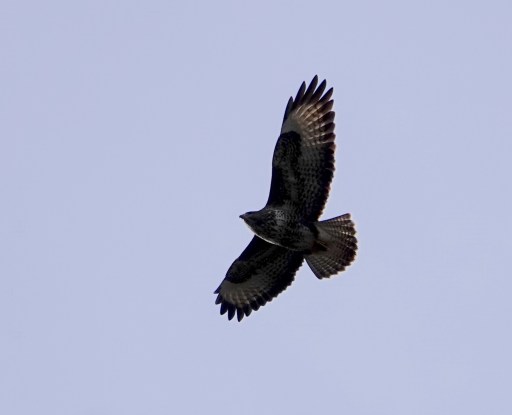
A few folk were beginning to feel a bit cold as we had been standing still for some time, and as it was now 12:45 we started off back. A large flock of Herring Gulls suddenly flushed from a field and quick shout went up as a raptor with a pale head was spotted, and this soon morphed into a very smart female Marsh Harrier – bonus bird! A couple of Buzzards circled together as we walked back, and the pylon Kestrel was hovering … and had a go at one of the Buzzards. Back by the reen there were 2 Stonechat fly catching from a fence. Once back at Parc Tredelerch I at least was pretty pooped but some folk still had enough left in the tank to have a look at the lake. I haven’t included any birds from there although I know there are Tufted Duck and a pair of Great Crested Grebes.
All-in-all a successful foray east of Cardiff, and pleasing to be able to show some unfamiliar birds to a couple of visitors from Birmingham who attended with one of our members.
Click here to see the full list [this will be updated as & when necessary].
John Wilson

Portland Obs weekend – 4-6 Oct 2024

Posted a little late!
Thirteen Club members met up at the first location, Maiden Castle just outside Dorchester at around 10:15. The fields below this huge iron age fort are a reliable site for Corn Bunting and other farmland birds. There were huge numbers of Goldfinch and Linnet feeding in an old sunflower crop and we eventually managed to ‘scope up a number of stocky Corn Buntings resting on a tree top.
From here we drove to Lodmoor RSPB reserve, E. of Weymouth. At the start of a circular walk, sharp-eyed Tim Adcock spotted a couple of Bearded Tits. After some patient viewing we all got glimpses of these reedbed residents. Other species here were Cetti’s Warblers heard, Black-tailed Godwits, Great White Egret, a good number of Snipe, a few Swallow and all the common dabbling ducks and a few Med Gulls. The resident Marsh Harriers didn’t show, which is very unusual.
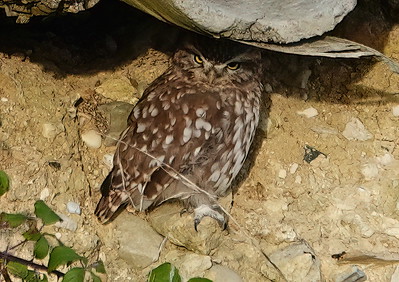
Next stop was the Ferrybridge car park, overlooking Chesil Fleet. The tide was low but we had decent scope views of Dunlin, Turnstone, Ringed Plover, 5 Bar-tailed Godwit and a few Sanderling, 2 Sandwich Terns and, for this site, the inevitable Mediterranean Gulls. A couple of Wheatear were also present. Time was marching on so we headed on to Portland Bill itself and down to the Observatory, which comprises the old Portland lighthouse. Once we had our rooms sorted and had ‘moved in’ it was time for a cuppa. A short walk to the ‘Obs quarry’, a vegetated hollow with a back wall of huge Portland stone boulders, failed to reveal the resident Little Owl. We did see this resident at some point during the weekend but I can’t now recall exactly when! Late afternoon and evening were spent chilling and Alan & Tim organised fish & chips.

Saturday is usually early breakfast then out on the terrace with ‘scopes, seawatching for a couple of hours. Most numerous were Gannets of all ages, then large-ish groups of auks comprising Guillemots and Razorbills although ID at distance is never easy. The best birds were small numbers of Balearic Shearwaters – regular passage birds here, best described as Manx Shearwaters with dirty underwings! The occasional Kittiwake passed by and a couple of Great Skuas and a few Common Scoter were seen. After tea/coffee to rest our eyes, we walked down to the tip of the bill. A Wheatear was on the large field. Sea passage had quietened so we headed up to the ‘top fields’. On the way Tim Adcock had brief views of a large pipit but it vanished from view – could have been a Richard’s! Also just as we set off a Hobby suddenly appeared and chased around for a short while, no doubt after the few migrating Swallows. The top fields provided a couple of Whinchat and a few Stonechats, and there were 5 Stock Doves in one field. News then came through of a Red-breasted Flycatcher at the Culverwell ringing area, which was on our way so we hurried off downhill. It looked like a needle in a haystack job in the dense scrub, so 2 or 3 of us [including me], who were wilting a bit, set off back to the Obs. The stalwarts who stayed ‘got’ the bird, so after our picnic lunches on the terrace, the others of us went back and eventually got views of this little gem. Another highlight was a Firecrest which had been trapped in the obs garden, so we had close views of this gorgeous bird when the warden Martin Cade, brought it up to the terrace to show us.
The afternoon was spent in a couple of wooded areas looking for Yellow-browed Warblers, which had been reported. It was quite windy which made finding small birds in tall Sycamores, quite difficult! We managed to find a few Chiffchaffs but not much else. Gareth Jenkins who joined us from his B&B accommodation, managed to see the local Barn Owl in the headlights of his car as he arrived. Dinner this evening was taken at the Eight Kings pub in Southwell, which Alan had booked during the fish & chip run. A couple of hiccups in the food orders, but we did descend on them with 16 orders! All in all it had been a good day.

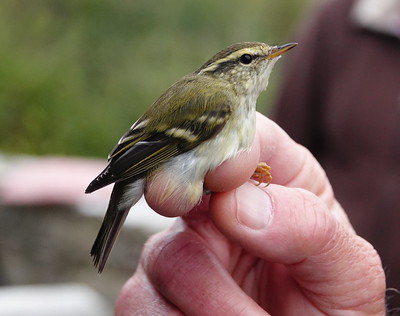
Sunday and seawatching again early doors – passage seemed to be a bit quieter this morning, but similar species were seen. Alan was lucky enough to see a passing Merlin, spotted by the resident seawtcher. We had to clear our rooms by 10 a.m. so as the weather forecast wasn’t too good we decided to head off to Ferrybridge again as the tide was about right. Our departure was delayed when news came that Martin had trapped a Yellow-browed Warbler, so we all trooped out to the terrace to get fab close up views of this nicely marked relative of Chiffchaff. Then, just as we were about to depart, a Red-breasted Flycatcher had suddenly arrived in a large Holm Oak near the Obs entrance. Sharp-eyed Tim A. spotted it in the dark under the tree and it was a different bird to the Culverwell one. It went into cover and we decided we had to leave. Tim Collier managed to get a great shot later, as he was due to stay another day, having travelled down in his campervan.
At Ferrybridge, the tide was so high there was no exposed mud and no waders! We spent some time studying the Med Gulls, of which there were about 80, so we managed to give some of the assembled spotters, a lesson in Med Gull ageing! Coffees were consumed, and some nice snacks from the cafe, and then the tide began to fall and the same species of wader returned, giving closer views this time. Also as a finale, 16 Brent Geese flew in, these being the dark-bellied race Branta bernicla bernicla, which breed in Siberia. Portland Bill had more or less disappeared in the increasing drizzle, so we all set off for home, except for those who had further plans. For some the journey back was pretty dire with torrential rain and standing water on the motorways, but we all got back safely after a great weekend.
The full list is here.

John Wilson

Bryngarw CP – 12 Nov 2024

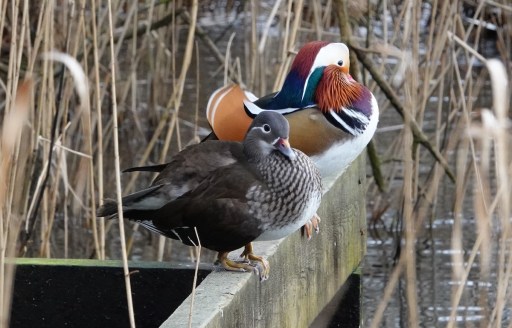
We had an enjoyable 3 hours at Bryngarw CP this morning with 13 booked participants and we were delighted to see our ex Chairperson, Adrian Murch with Howard Driver, who we chatted with whist admiring the drake Mandarin at the pool. We did a circuit up throiugh the woods, then down around the boardwalks and along by the river. 32 species were logged, highlights being the Mandarin, Dipper, and a circling Red Kite plus a good selection of wooddland species. Also some of us had a nice chat over coffee at the cafe afterwards. Thanks to all who attended. A few pix by yours truly, below. John Wilson. Full list click here:

R.Ely floodplain – 11 Aug 2024

We met up at the layby just outside Peterston-super-Ely at 9 a.m. Davis Rich immediately gripped everyone off as he had seen a Kingfisher by the nearby footbridge! As we were about to set off, two Sparrowhawks did a nice fly-by, and a Kestrel and House Martin were noted. Access to the site was by walking down the road, across the small road bridge and then following the Lanlay Meadows National Trust signpost. Passing through some trees one emerges into a series of fields with the meandering R. Ely to the right. It was pretty obvious straight away that small birds were going to be hard to find – there was very little vocalisation. David Rich was on a roll as he spotted a Green Woodpecker sitting in the open in a distant dead tree. There were 3 corvids in the same tree and I noted the tapered bill of the upper one, which all agreed, was a Rook. Walking slowly along, a Chiffchaff was heard calling and small numbers of Goldfinch twittered in flight overhead. Other fly-overs comprised a couple of Lesser Black-backed and Herring Gulls, and then a calling Buzzard. The walk crosses several small bridges over ditches that lead into the river, and the whole site is pretty muddy in winter and requires wellies. A nice distraction as we approached one bridge, was an impressive Dark Bush-cricket that Alan had spotted in the grass, and I managed to get a nice photo of that [which is with the small selection I included with the FB and website posts]. Eventually John & Alan advised us that we were near the ‘hot’ spots for seeing the Green Sandpipers. John went off to do some jungle bashing though the dense growths of the pesky Himalayan Balsam, and we were to keep our eyes peeled along the preferred stretch of river.
After about 10 minutes a group of 6 suddenly exploded from the shelter of a corner of a meander and shot up into the air uttering their shrill piping calls. For the benefit of folk not familiar with this species we always say they look like large House Martins in flight due to the bright white underparts and bright white rump, contrasting with the rest of the jet black plumage. They circled high for a while then dropped down in the distance into another part of the river. As John returned from his jungle bash, two more flew up calling and flew high quite a distance away, but no doubt eventually returned to the river. By another meander in the river we watched a Grey Wagtail fly-catching, and in a riverside Willow on the walk back, a mystery greyish bird spotted by Eric, was eventually clinched as a Garden Warbler. Also on the walk back, last-minute attendee Charlotte spotted another Bush-cricket and managed to get a phone pic – a quick look at that confirmed its ID as a Roesel’s Bush-cricket – a great find and a new species for the site. That pic is in the comments on the FB post and in the website post.
David Rich is a keen botanist so to fill in the birdless gaps he found Round-leaved Mint and Marsh Woundwort, and contrasting with the ever present pink of the Himalayan Balsam, was a single plant of Orange Balsam [Impatiens capensis].

All in all an interesting outing, albeit not as birdy as we would have hoped, although we did log 28 species.

Llantrisant Common 28 Apr 24

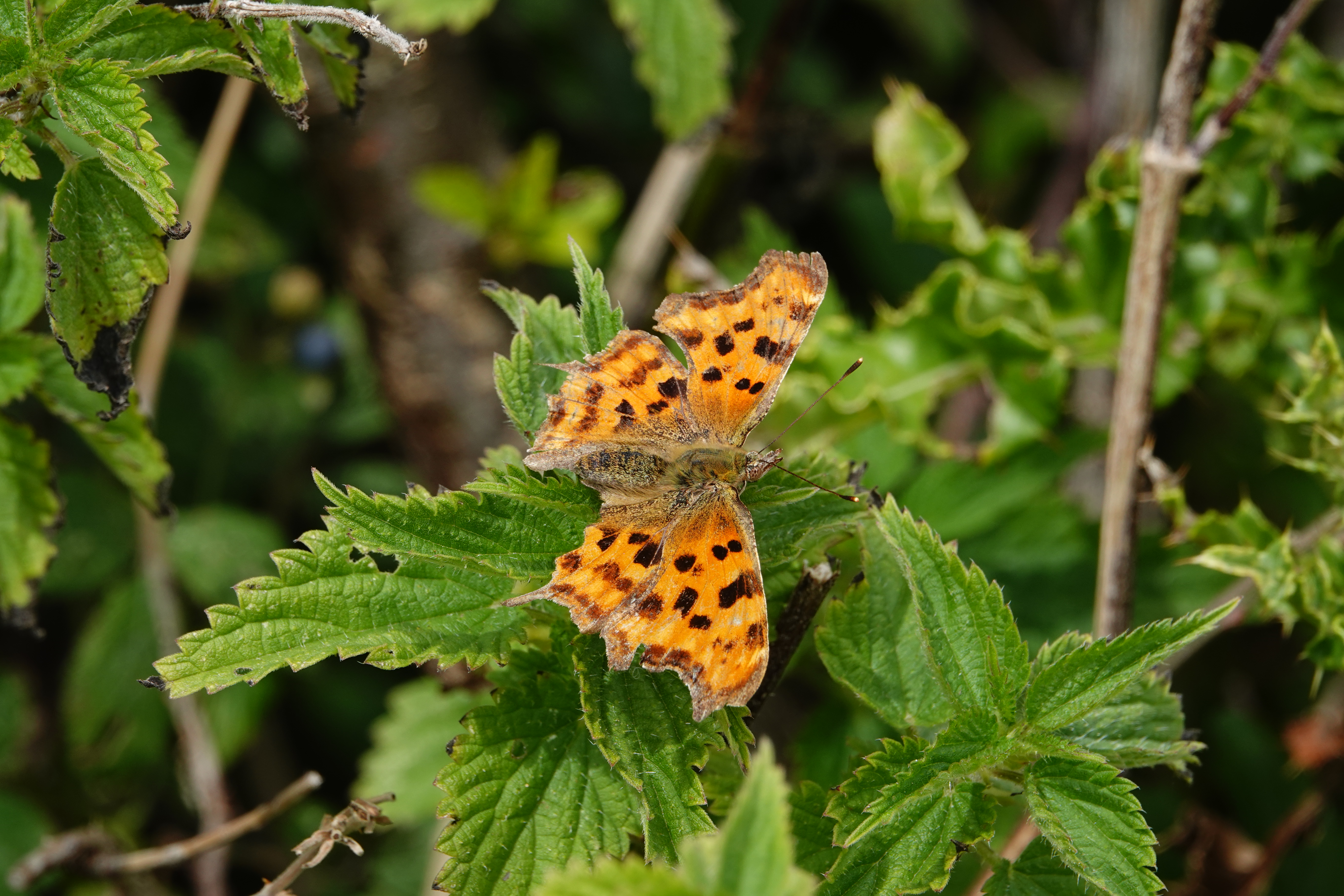
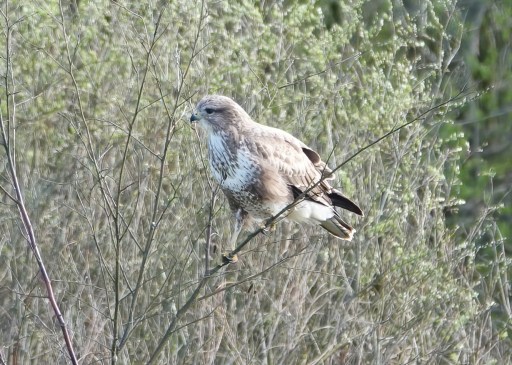
Perhaps the fact that it was a new venue for some, including me, attracted an unprecedented 29 participants. Local resident and GBC member Trim Collier was to lead, but given the numbers, and the good fortune that another local resident, your committee’s Paul Denning, had decided to tag along, we split into two groups and headed off to do a roughly circular walk in opposite directions. I was in Paul’s ‘team’. We set off anticlockwise and were soon hearing Willow Warbler song and snatches of Common Whitethroat, and lots of Blackcaps. House Sparrows were in the brambles near the houses and Starlings flew back & forth from the houses presumably collecting food. We soon got on to a pair of Stonechats, the first of maybe 4 pairs. In a more open area some of our group were gesturing to come over – Andrew Withycombe had spotted a female Adder in a clump of vegetation. With careful approach all managed to get excellent views and photos. A couple walking their dog said they’d seen a bird of prey in a bush, and we were soon watching a smart pale Buzzard resting in said bush. Further on, plaintive overhead calls were heard and tentatively ID’d as Tree Pipit, and soon we had nice views of a bird feeding on the ground. As I scanned the horizon a small group of Swifts came into view and a few folk managed to pick them up as I called them. A few Swallows flew past. As we reached a very boggy area Paul suddenly called Green Hairstreak, and most got on to it before it flew a short distance, but it couldn’t be relocated. A number of male Orange-tips were in the same area and a single Peacock. Shortly after this we met Tim’s group coming in the opposite direction and we exchanged ‘gen’ as to what we had seen. We then decided to head straight across to the tarmac road and walked back to the start point along that.
All in all a very nice walk – quite chilly at first but pretty warm as we finished, after about 4 hours! A total of 35 species were logged.

A western adventure – field trip to Carmarthenshire, 13 Apr 2024

Kidwelly Quay, Pembrey Harbour, Sandy Water Park & WWT Llanelli

Thirteen Club members met up at at Kidwelly Quay at 9 a.m. in dismal fine drizzle and a stiff breeze – ideal conditions for creating wet optics! The high was extremely high already despite there’re being another hour to go. Hence there was a dearth of waders, but we did spot a Common Sandpiper by the railway bridge, some distant Oycs in the murk and on the usual circular walk, a few Whimbrel and Curlew. Two pairs of Red-breasted Merganser were distant in the water. On the walk a constantly singing Sedge Warbler refused to show, but Chiffies and Willow Warblers were more obliging. Scoping the fields to the east eventually gave us poor views of a small group of Pink-footed Geese, which was a bonus. By the water treatment works Goldcrests and a small number of Long-tailed Tits were active, and there were large numbers of hirundines hawking insects, mostly Swallows and Sand Martins, with a few House Martins. The former two were hitching roundabout rides on the slowly rotating filter bed sprinklers.

We then moved east to explore the old jetty at so-called Pembrey Harbour, just west of Burry Port harbour itself. The sandbar offshore just had a tight group of around 1000 Oystercatchers, but on the tidal saltmarsh there were 3 Ringed Plover and a Dunlin, plus a few pipits which caused a lot of discussion. They were Rock Pipits but didn’t have the classic dusky Rock Pipit look about them Many photos were taken and we were speculating as to whether at least one or two were of the Scandinavian ‘littoralis’ race. David Rich had ‘scoped a few Common Gulls in his Questar reflector ‘scope but the rest of us missed those. A male Wheatear posed on the jetty wall.

Next up was a visit to Sandy Water Park near Llanelli to see the adult Little Gull. Sadly the Bonaparte’s Gull which had been there for sometime, was not present. The Little Gull performed well in the usual constant active dipping flight characteristic of the species.

Having had our fill of that, we dropped in to the WWT Llanelli Wetland Centre where a Spoonbill, a Long-tailed Duck and a Russian White-fronted Goose had been reported. Those still with us [some had left previously] headed straight down to the British Steel hide to see what we could see. On the walk down I had a fly-over Peregrine. Two Greenshank were resting in the scrape area and by the pool from the rear there were many Black-tailed Godwits and Redshank, and eventually 5 Ruff were found by David Rich. The visibility was very poor at any distance but during some concentrated scoping of the saltmarsh I finally found the Whitefront, in with some Greylags. We dipped on the Spoonbill and Long-tailed Duck, but rewarded ourselves with a nice coffee back at the cafe, to end a successful day despite the damp start. A total of 66 species had been recorded.

Dinas RSPB – 26 May 2024

8 hardy folk met this morning at Dinas RSPB, north of Llandovery, at 09:30 for some Welsh specialities. Within 5 mins of starting the walk, the first of the forecast showers arrived! We endured 3 or 4 of these, a couple of which were pretty heavy. We persevered but the birds weren’t very ‘showy’. We had to make do with brief views of Pied Fly but a couple of Spotted Flys were more obliging. Redstarts showed quite well, but only 1 Wood Warbler was heard faintly but not seen. A pretty damp day all in all but always a nice location to visit. A couple of the group did the whole circuit but us oldies declined the rocky bit. Alan Rosney got back to the car park first and lucked in on a fly-over Goshawk and the two ‘full circuit-ers’ had a fly-by Cuckoo. Thanks to the hardy participants for attending! Update – 35 species were logged – click here for the [now updated] list.
John Wilson

Forest of Dean 29 Feb 2024

A good turnout of 19 folk met at the New Fancy View viewpoint north of Parkend at 10 a.m. on a still grey, but at least dry, day. We scanned and scanned for about an hour but sadly had no luck with the hoped for Goshawk despite this being the place to look for them. Perhaps the cold grey still conditions, and the resultant lack of lift, had put them off. There was even a lack of Buzzards. We did log a few species such as a couple of Ravens, Jay, Magpie, Crow, Mistle Thrush, fly-by Chaffinches, & Goldfinches and unexpectedly a pair of Goosander. A Coal Tit was feeding as we walked back down the steep access path. 
Next we headed for RSPB Nagshead with the rather ambitious hope of finding Lesser Spotted Woodpecker. We walked the long trail, returning via the incredibly muddy lower section. No LSW sadly, but good numbers of common woodland species including Blue, Great, Coal and Long-tailed Tits, Nuthatch, Treecreeper, Wren, Song Thrush & Blackbird.
Back to Parkend and the green by the cricket pitch, surrounded by tall trees, a Hawfinch spot. Some seed was distributed on their favourite feeding log. We waited quite some time before any bird at all was seen, then a few Chaffinch and Greenfinch came in, plus a lone male Bullfinch, but no appearance by the big beaked one. There was a lighting ‘smash & grab’ visit by a Marsh Tit which although incredibly brief, was identifiable by its obvious extensive bright white cheeks. After a while a Great Spotted Woodpecker was heard and then seen in one of the tall trees, before flying off. Just as we had given up and were about to leave, a Sparrowhawk flew through.
Final stop was Cannop Ponds where we were at least guaranteed a good number of species. We parked up by the stone works at the southern end of the valley, where there are feeders, and predictably there were many Chaffinches and Tits coming down to feed on seed spread on the boulders by the lake. In Alders nearby there were a few Siskin, and a Dipper was spotted by the pond outlet, which was quite a torrent. On the water we had our first Mandarin and a couple of Little Grebes were diving. A couple of folk drove up to the northerly car park and the rest of us walked along the lakeside path. This gave us nice views of a pair of Goosander [presumably the ones we had seen at New Fancy]. A lakeside viewpoint gave very close views of Mandarins and a pair of Gadwall. By the northern lake the feeding station by the entrance road eventually gave up the regular Marsh Tit plus the usual Chaffinches and Blue & Great Tits. We had nice views of a Dipper by the stream that exits down towards the lower lake. Back at the stone works end we were greeted by an incredible 20+ Mandarins, mostly drakes, out on the grass beside the the lake, plus one cheeky one up on the fence below the seed feeder, mopping up the spillages. A couple of Greylags and a pair of Mute Swans and a few Mallard completed the wildfowl species. Last but not least were Coot & Moorhen and a pair of Lesser Black-backed Gulls.

RGW – 4th Nov 2023

Eight participants braved a rather damp start for a walk to Rumney Great Wharf this morning. However it cleared up enough for some decent birding. We logged 47 species in all. Difficult to pick out highlights but Peregrine, Sparrowhawk and Kestrel were all seen along with Fieldfare, Redwing, Curlew, Pintail, Sheduck, Redshank, Turnstone etc on the foreshore. 3 Ring -necked (Rose-ringed) Parakeets were very vocal around Lamby Lake. Many thanks to all those that came along, despite the weather. Click here for the list, courtesty of Nick McNeil-Watson via eBird

Portland Bird Obs weekend 2023

13th to 15th October 2023.
Our annual visit to Portland began at Maiden Castle, near Dorchester, where we stopped off, hoping for Corn Bunting. We weren’t disappointed, seeing half a dozen birds in the crops and on the fence lines. Here we also saw Kestrel, Linnet, Goldfinch, Lapwing, Stonechat, Golden Plover, Buzzard, Skylark, Meadow Pipit and more. Just as were leaving, a small raptor came in chasing the small finch flock – a Merlin on the hunt for lunch.
 Our next stop was Lodmoor, where almost the first bird we saw was a juvenile Marsh Harrier. The remarkable increase in the numbers of Great White Egrets was evident here, where there were at least 4 individuals, these even outnumbering the Little Egrets. Wader numbers were low, although we did see Black-tailed Godwit, Snipe, Buzzard, Lapwing and Dunlin. Half a dozen Mediterranean Gulls were on the western edge of the reserve. It started to rain quite heavily and we had to seek shelter. The local Sparrowhawk looked really bedraggled, sitting on top of one of the posts.
 We decided to head for the Obs., with a brief stop off at Ferrybridge. There was a lone Brent Goose, a few Bar-tailed Godwits, Ringed Plover, Dunlin and Turnstone there. As the tide was well out and the rain was getting heavier, we decided to call it quits for the day.
 We were too late for the seabird spectacular off the Bill however. We were informed by the regular sea-watchers there that hundreds of Cory’s Shearwaters has been passing the headland, together with Great, Sooty and Balearic Shearwaters and a few Skuas too.
 Unfortunately (or so we thought) the strong south westerly winds dropped and backed to the north overnight, meaning that the seabird passage was much lighter the following morning. Nick McNeil-Watson did manage to get on to a Sooty Shearwater and I had distant views of a Balearic, but nothing like the previous day’s bonanza. Generally sea watching was quiet with reasonable numbers of auks, Kittiwakes, Mediterranean Gulls and Gannets passing.
 The northerly winds however did bring benefits with a light passage of migrant passerines. We were soon rewarded when Martin Cade, the warden of the Obs. brought a re-trap in from the Crown fields – a Radde’ Warbler. This species breeds in Siberia and usually migrates to SE Asia, so for it to occur in the UK is most uncommon. It is a very skulking bird, akin to its close relative the Dusky Warbler. It was a first for all of our group. What a start to the day! This was followed by another very special bird – a Little Bunting, a bird that breeds in the taiga region of NE Europe. We were on a roll.
 There had been a passage of Redpolls and one dropped into the ringing nets in the garden. It was great to see this species up close and personal, as it was to encounter a male Sparrowhawk that had been trapped and ringed.
 Prior to all his excitement, we had popped over to the Obs. quarry and were pleased to see that Little Owls were still in residence. Cindy Howells even caught sight of a Barn Owl disappearing into a crevice in the rock face. Elsewhere we saw Wheatear, Kestrel, Meadow Pipit, Stonechat, Swallow, Peregrine and Rock Pipit.
 We re-visited Ferrybridge in the afternoon, however there was little new, so we went on to Radipole, where we Pochard to our trip list (although Nick did have a view of Bearded Tit).
 Sunday dawned bright and sunny. Before we set off, we spent some time examining the contents of the moth trap, encountering some “new” species. We then decided to go on a “twitch”. A Squacco Heron had been seen in Ham Wall, so we stopped off on our journey. It had been flushed by a fisherman, so wasn’t showing when we arrived. The sight of 41 Cattle Egrets was rather special however. Four of us decided to linger, in the hope that it would show again and it did! We were rewarded with distant views but the ginger coloured body and white wings stood out, a new bird for most.
 Many thanks to all of the participants* and to the staff at the Obs, for their hospitality. It proved to be a great weekend with lots of banter and some very special birds seen. Bring on next year.
Alan Rosney
Click here for the trip list, which comprfises 98 specides.
 *Sadly John Wilson and Christian Jenkins had to drop out at the last minute. Sorry guys, you missed a good’un.

Goldcliff 5th Oct 2023

We had a reasonably successful trip to Goldcliff in Gwent with 8 participants. Waders were scarce due to high water levels & no exposed mud, but the highlight was a ‘set’ of 5 ‘heron types’ – 2 very active Spoonbills which were juveniles due to their flesh coloured bills, 1 Great White Egret, 1 Grey Heron, several Little Egrets and best of all, a Bittern which initially appeared briefly and then after a short while in cover, flew left to right for some distance on front of the seawall hide. A lone Barnacle Goose [prob not of truly wild origin] was associating with the Canadas present. Full list of the 36 species logged is here.

Parc Slip NR 24th Sep 2023

We were pleased to welcome 10 folk on our first GBC Birdwalk for Women, it was great to see old and new friends, then have snacks in the cafe together afterwards to discuss the list!
On this overcast damp day, saw and heard 31 species between us, the highlights being – good views of a kingfisher on the lake, glimpses of a Water Rail by some, and several Bullfinch. We were entertained by a juvenile Little Grebe trying to swallow a fish.
Full list – Magpie, Robin, Carrion Crow, Mallard, Woodpigeon, Bullfinch, Wren, Blue Tit, Great Tit, Goldcrest, Long-tailed Tit, Siskin, Chiffchaff, Stonechat, Meadow Pipit, Coot, Little Grebe with young, Moorhen, Jay, Kingfisher, Herring Gull, Buzzard, Red Kite, Coal Tit, Blackbird, Raven, Chaffinch, Water Rail, Blackcap, Grey Wagtail, Dunnock.

Many thanks to Strinda for co- leading and Angharad for keeping the list.
Summary by Jean Haslam

Steart Marshes Sep 23rd 2023

A successful GBC trip with 10 participants, to Steart Marshes WWT reserve. Wader-wise the reserve was pretty quiet with just a few distant Lapwing & Golden Plover. Highlights there were 3 sleeping [of course!] Spoonbills, an immature Cattle Egret and a few Ruff. Out at Steart Point we had 2 Little Stint, at least 6 Curlew Sandpipers, plus Knot, Ringed Plover, Dunlin, Oycs and Curlew and about 1000 Shelduck. Other highlights were Marsh Harrier and Peregrine. 55 species in the end was pretty good. Many thanks to those who came along. Click here for the full list. Only 1 photo taken [birds here are often pretty distant] – the fem/imm Wheatear which was one of a few seen on the walk out to Steart Point. An Osprey!! … was only seen by two folk who had lagged behind finishing their sandwiches – good move!!

Lavernock 7th Sep 2023

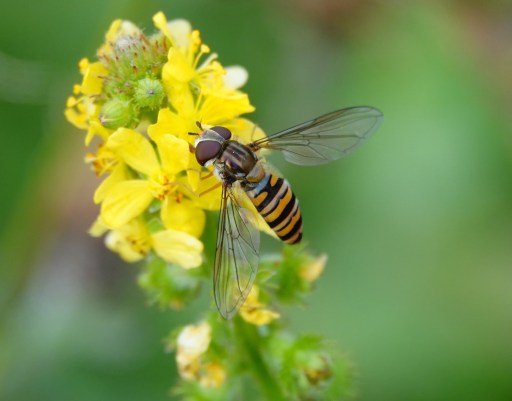
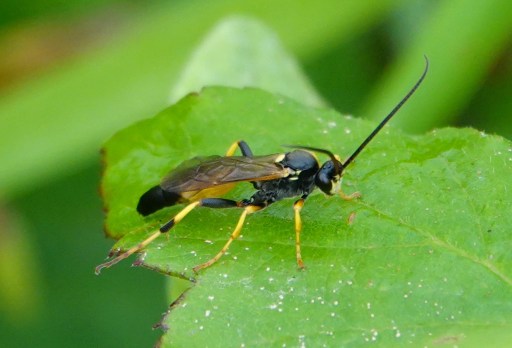
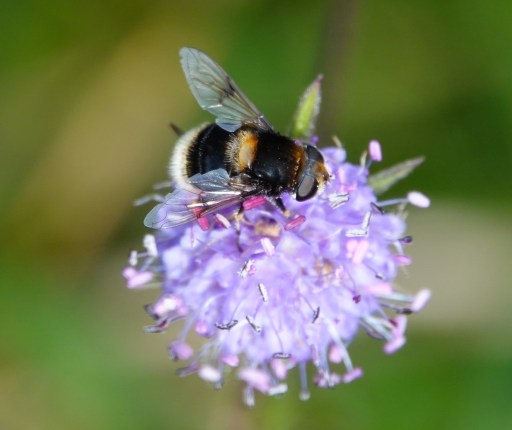
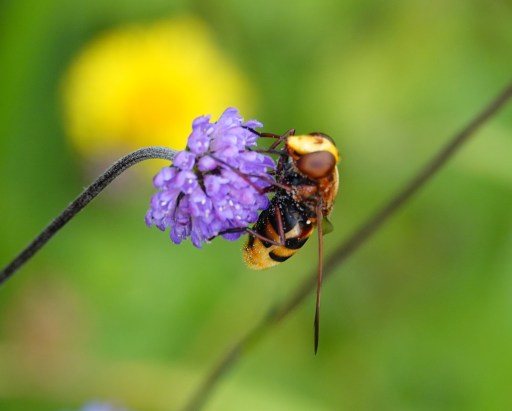
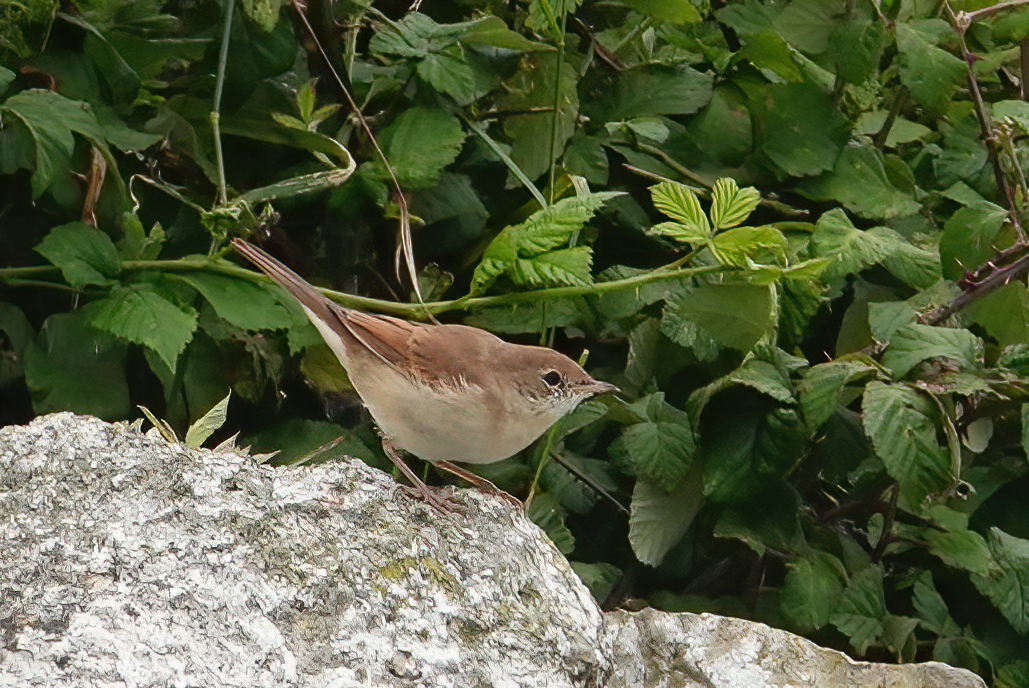
We had a warm humid troll round the Lavernock WT reserve and along the coastal path – 11 participants came along – thanks for your support and patience folks. The hoped for small birds were very much not in evidence but nevertheless we logged 28 species – click here for the full list. There was continuous light passage of Swallows. Apart from the common birds, other interest was provided by a Small Copper butterfly, Common Migrant and Common Darter dragonflies and various hoverflies including several of the impressive and scary looking hornet mimic, Volucella zonaria. For interest I’ve posted some pix below.
Peterston Moors 27th Aug 2023

Twenty folk enjoyed the field trip on Sunday 27th August.
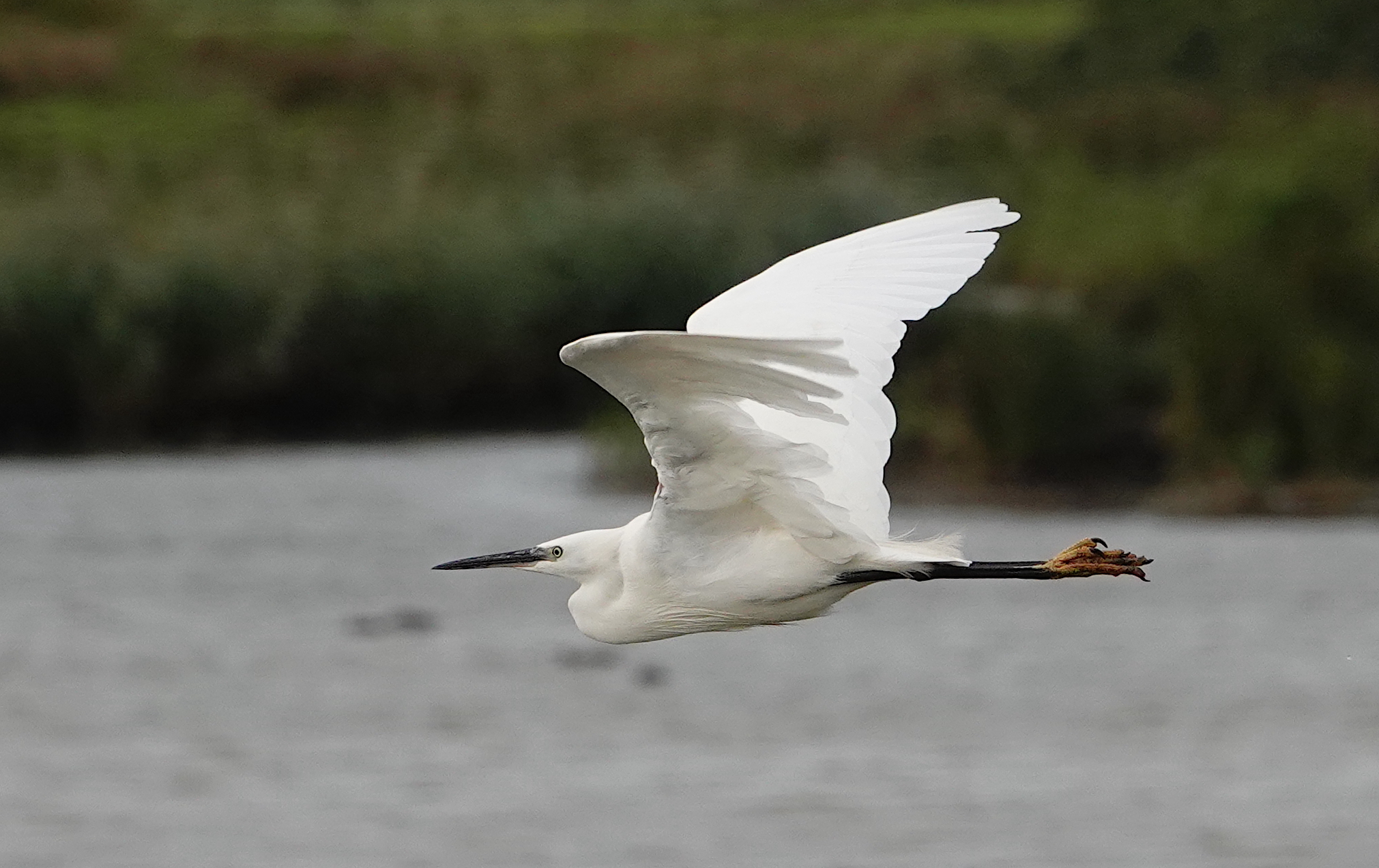
We were very lucky to be led by Dan Jenkins-Jones , an expert on the site, who made sure that everyone had some view of the elusive and rare Green Sandpiper. After a lot of skulking, a total of seven were found!
Full list-
Grey Heron, Cormorant, Carrion Crow, Common Buzzard, Long-Tailed Tit, Wood Pigeon, Starling, Robin, Jackdaw, Blue Tit, Great Tit, Swallow, Magpie, Wren, Chiffchaff, Nuthatch, Lesser Black-Backed Gull, Jay, Blackbird, Great Spotted Woodpecker, Rook, Stonechat, Kingfisher (heard), Green Sandpiper, House Martin, Goldfinch, Meadow Pipit, Moorhen, Mallard, Canada Goose.
Many thanks to Dan (especially for the chocolate!) and to David Hibler for leading.
Summary by Jean Haslam

Goldcliff 6th Aug 2023

We had a reasonably successful trip to Goldcliff in Gwent when 21 participants logged a total of 58 species. Waders were a little disappointing but we did see c.55 Blackwits, c.100 Lapwing, c.40 Dunlin, 1 Redshank, 11 Ringed Plover and a fly-over-calling Green Sandpiper. Other highlights included 4 Yellow Wagtails, a Spoonbill, fem/imm Redstart and 2 Marsh Harrier. Not many bird pix were taken [by me at least]. Featured below are the notorious Goldcliff ‘Bosprey’ [v distant][a v pale Buzzard that is often mistaken for Osprey], a fem/imm Redstart and some Blackwits & Dunlin. Full list can be seen by clicking here. John Wilson

Parc Cwm Dare – 4th July 2023

Despite the rather wet start to the day, 10 participants attended the field trip to Parc Cwm Dare. We were rained on for about 45 minutes but we were soon observing breeding activity with juvs of Chiffchaff, Blackcap and Bullfinch being fed by adult birds. Other highlights were 2 immature Peregrines chasing each other around the face of the Tarren Y Bwllfa cliff, several Green Woodpeckers including some juvs, and lots of Siskins. Fine ‘scope views were had from the top viewpoint of one imm Peregrine sitting up on the cliff [well done Alan for carrying your ‘scope all the way]. Thanks to all who came despite the weather. John Wilson.Full list on the trip lists page.