
Rather quiet – of note were Redstart, Yellow Wagtail(3), Ruff, Greenshank(4), Common Sand (2), Whimbrel and LRP(4) plus good numbers of Avocet and Black-tailed Godwits. Also seen several Clouded Yellow butterflies and a Stoat. Bumped into a couple who had seen Hobby, Little Owl and Marsh Harrier.
Category: Sightings
Llanrhidian
2 Marsh Harriers again present this morning, an adult female and a juvenile. Also a Pied Flycatcher, 26 Sedge Warblers and 7 Reed Warblers were ringed and a minimum of 11 Green Sandpipers.

Oxwich Marsh
Grasshopper warbler, garden warbler, lesser whitethroat and obvious passage of sedge warbler, willow warbler and whitethroat noted this morning.
Pant Norton
Some signs of movement this morning, with two Spotted Flycatchers, plus decent numbers of Willow Warblers and Whitethroats.
Kenfig Rivermouth
A different female type Marsh Harrier to the one seen yesterday was present at the Kenfig Saltmarsh this afternoon. This bird showed no wing moult and much more cream on the head than the previous bird, which was in very heavy wing moult – but I don’t know if this is the original bird found by Darren Coombes or not… This bird also flew towards the tip but at low altitude and is likely to still be in the area. 21 Sanderling and 33 Oystercatchers were on the beach and four Stock Doves flew towards Kenfig Pool.
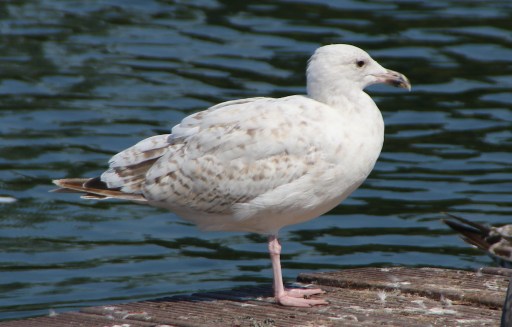
Not as exciting as a Marsh Harrier but … a v pale [part leucistic-ish?] 1st yr Herring Gull that’s been around at Cosmeston for a while. – present this morning.
Llanrhidian
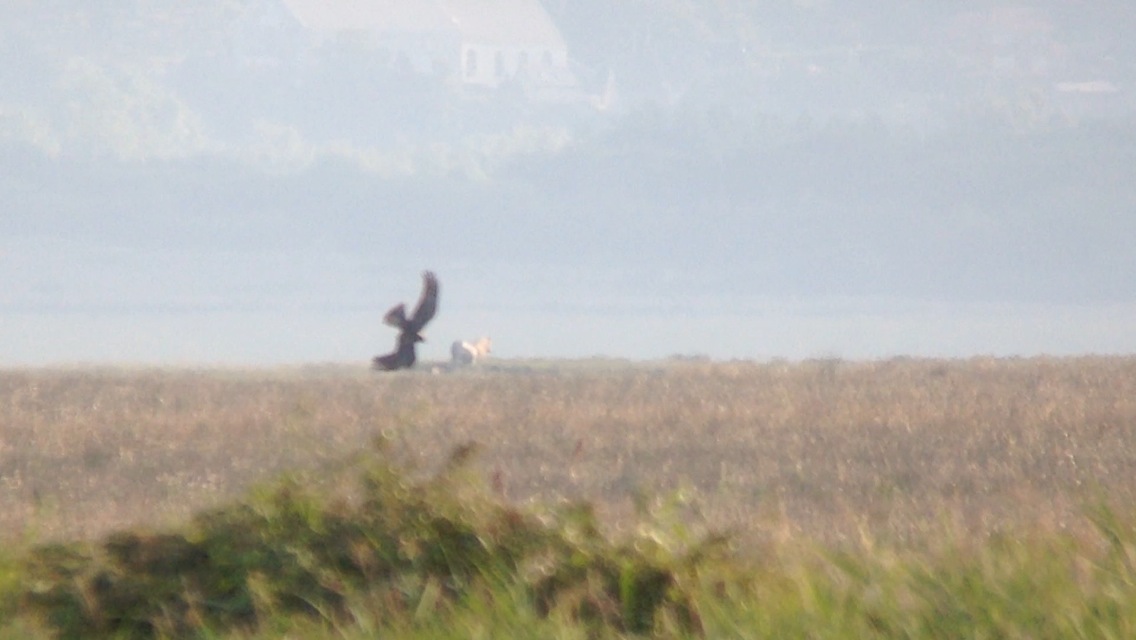
Juvenile Marsh Harrier hunting first thing, which spooked at least 4 Green Sands. A little later Neil Edwards saw two juveniles in the same area SS4993.
Cardiff Bay
The suspiciously tame red-crested pochard / hybrid was still present this evening at the boardwalk. No sign of the recent GWE.
Cosmeston
The G C Grebe pair seem to be down to 1 full grown young. A flock of 20+ Linnet were in the west paddock and quite a number of Common Blue butterflies around. Also Black-tailed Skimmers in the wet areas.
Mynydd Meio
Not many birds around. Highlight was f/o Stock Dove, which is very uncommon round these parts. Also Linnet, Whitethroat, Willow Warbler, Jay, Buzzard and Magpie. 13 sp. of butterfly noted with loads of Gatekeepers, Skippers and Common Blues on the wing. Nice to see singles of Grayling, Holly Blue and Brimstone.
peterstone gout
july 23rd. 2-commom sandpipers,1-greenshank and 2-clouded yellows.
Kenfig Saltmarsh
The worn female Marsh Harrier was present again until 10.30 when it drifted high west over the tip and out of sight. Also present were a Water Rail, five Common Snipe and a Clouded Yellow.
Tutt Head 06:20-07:00
Short seawatch. Single common sandpiper and dunlin over the sea. 15 common scoter west. 40 Med gulls on the upper shore at Bracelet.
Brunel Dock
28 redshank 1 whimbrel 1 common sandpiper 30+ black h gulls

Ogmore Estuary
Juvenile Mediterranean Gull wearing a green ring (no scope – not read) and two Little Egrets, this morning.
Sker
The first 2 Yellow Wagtails of autumn – with the cattle this morning and 4 Whimbrel on the rocks. Typical July fayre at Ogmore recently – Green Sandpiper (19th), 8 Common Sands, 3 Little Egrets and 2 Redshank.
Port Eynon, Gower
With Will W-D
Peregrine, Stonechats, Rock Pipits, Whitethroat, Green Woodpecker.
Few Gannets, Sandwich Tern, Curlew, distant Auk sp, Med Gull, 2 Ringed Plovers and a single Eider juvenile just off rocky beach.
Pennard G.C – Gower
East side of course,along Sandy Lane to bird hospital and return this morning.. Lots of meadow pipits with evidence of breeding.. Kestrel,buzzard,loads of jackdaws,house sparrows and a few rooftop herring gulls… Lots of butterflies and a few dragonflies…
Dave Glanville
A message from David Rich, GBC member. For those who knew Dave Glanville:
“Sad to report that Dave Glanville has passed away. He lived in Cardiff for a number of years before moving to Pembs.
I had the privilege of knowing Dave and birded with him when he was in Cardiff and after he moved to Pembs. The last couple of trips were to see the Pacific Loon in Pembs and the Long-billed Dowitcher
at Kidwelly. He was a lovely chap, full of humour and an excellent and enthusiastic birder. Will be sadly missed.


You must be logged in to post a comment.